LL Cool J & Major League Baseball
Cameron Casey on directing LL Cool J for MLB’s “What a Game” campaign and bringing music-video energy to national sports advertising.
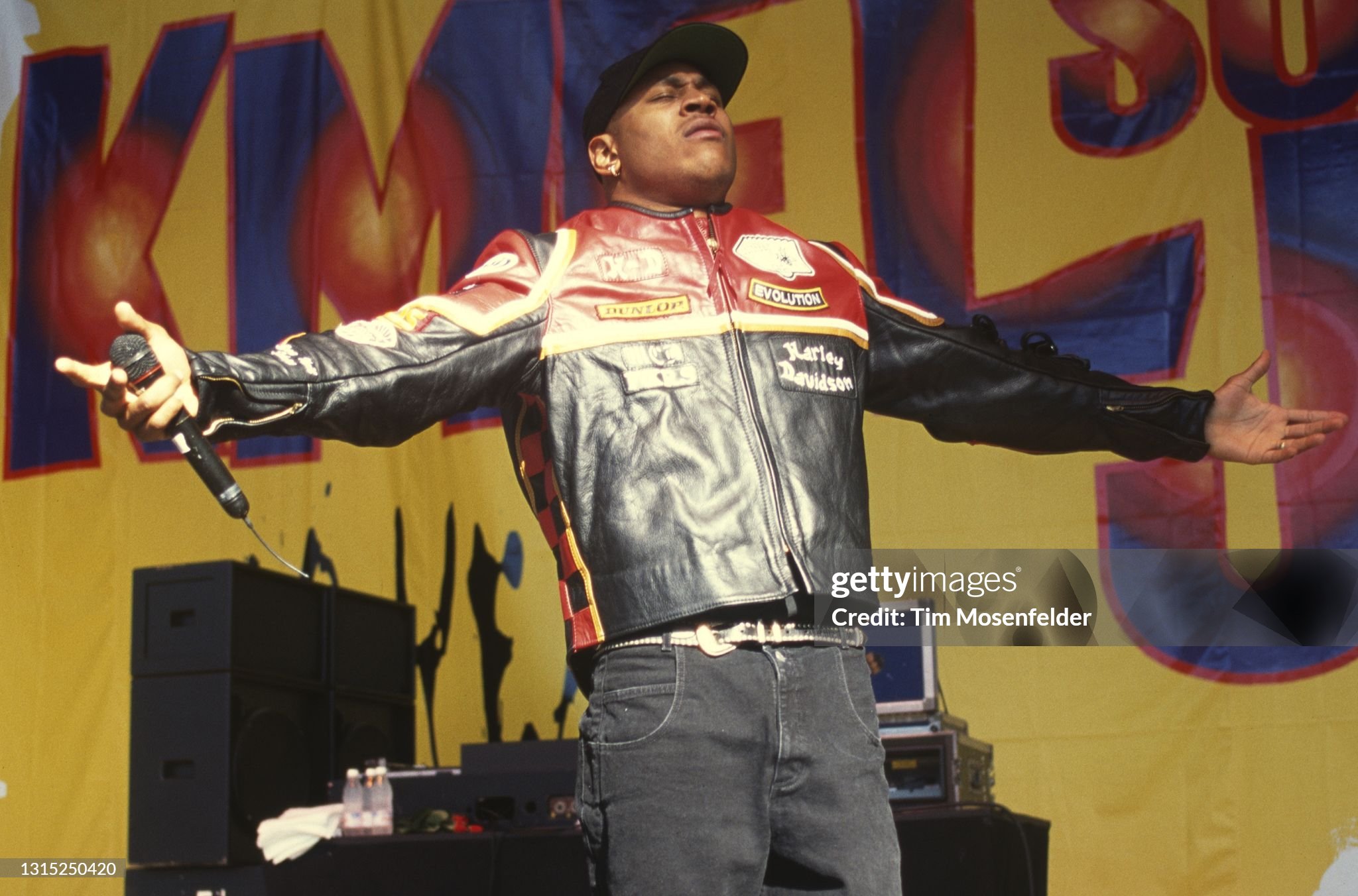
AT A GLANCE
The people, the role and the setting behind the project.
- Cameron's Role
- Director’s Story • Bedford Falls • Major League Baseball “What a Game” • 1996
- Status
- Completed
THE OPPORTUNITY
A new language for the game
In the mid-1990s, Major League Baseball faced a creative challenge that went well beyond advertising. The 1994–95 players’ strike had disrupted the sport’s relationship with its audience. Reconnecting with fans, and introducing baseball to a younger generation, called for something more culturally immediate than a conventional highlight reel.
The answer was to bring music into the ballpark in a different way. A campaign built around “Take Me Out to the Ball Game” invited major recording artists to reinterpret a familiar American standard in their own voices. LL Cool J brought hip-hop, Aretha Franklin brought soul, and the Goo Goo Dolls brought alternative rock. Each version offered a different point of entry into the sport.
ARCHIVE / PRESS SIDEBAR
From the archive
Los Angeles Times, “Music Heavy Hitters Step to the Plate” (May 3, 1996): https://www.latimes.com/archives/la-xpm-1996-05-03-ca-131-story.html
The Washington Post, “Baseball’s Sound Strategy” (May 2, 1996): https://www.washingtonpost.com/archive/sports/1996/05/02/baseballs-sound-strategy/89a40216-63e8-42f4-a052-773695a5d307/
MLB.com, renditions of “Take Me Out to the Ball Game”: https://www.mlb.com/cut4/for-the-105th-birthday-of-take-me-out-to-the-ballgame-here-are-the-five-best-worst-and-weirdest-renditions/c-48394338
Library of Congress, history of “Take Me Out to the Ball Game”: https://www.loc.gov/exhibits/baseballs-greatest-hits/take-me-out-the-ball-game.html
For me, the LL Cool J film arrived at a pivotal moment in my career. I was moving from directing music videos into national commercial work at Bedford Falls, the Hollywood production company. The project offered an unusual opportunity to carry the pace, imagery and creative experimentation of music filmmaking into a major sports campaign.
THE BUILD
Meeting LL Cool J
I had admired LL Cool J’s work for years, so collaborating with him was both a professional milestone and a genuine pleasure. Our conversations were about more than having a recording artist perform a recognizable song. We wanted the film to have its own visual identity: one that respected baseball’s scale and history while moving with the confidence and energy of contemporary music.
Working with the advertising agency, we developed an approach that felt closer to a music video than a traditional sports commercial. Rhythm, performance, graphic composition and the atmosphere of the stadium became parts of the same visual system. The aim was to make the game feel alive to an audience that might connect first with the music and then with baseball itself.
THE TURNING POINT
Designing the visual experience
Projection became an important element of the visual language. Rather than relying solely on straightforward game coverage, we explored layered imagery and a more expressive relationship between performer, players, architecture and movement. The challenge was to preserve the authenticity of baseball while giving the commercial a contemporary visual signature.
Ballpark environments mattered too. Their geometry, light, scale and history brought a sense of place that could not be reproduced on a soundstage.
The finished film brought LL Cool J together with Major League players. Contemporary coverage identified Ken Griffey Jr., Sammy Sosa, Eric Young and Marc Newfield in the commercial. An influential hip-hop artist alongside recognizable athletes made the message immediate, without asking baseball to abandon what made it distinctive.
More than one commercial
The LL Cool J film was part of a larger Major League Baseball initiative, not a standalone experiment. The “What a Game” campaign extended the idea across musical styles and artists, including Aretha Franklin and the Goo Goo Dolls. It showed how one recognizable cultural property could support multiple creative executions while keeping a coherent campaign idea.
For me, this was one of the largest commercial campaigns of that period, and one of the defining experiences of moving from music videos into advertising. It brought together an ambitious agency concept, a major sports organization, exceptional artists and athletes, and the production resources to execute a distinctive visual approach.
RESULTS & EVIDENCE
Why it still matters
The most enduring idea behind the work was simple. If a brand or institution wants to connect with a new generation, it has to participate credibly in the culture that generation already inhabits. The campaign did not replace baseball’s traditions. It reinterpreted one of its most familiar songs through the artists and visual language of the moment.
That remains a principle I carry across creative work today. The strongest campaigns do not merely borrow attention. They find an authentic point of connection between the subject, the talent and the audience, and build something memorable from it.
— Cameron Casey
IN MY OWN WORDS
THE STORY BEHIND THE WORK.
WHAT ARE YOU BUILDING?
Every project begins with an opportunity, a decision and a story worth telling. I'd like to hear yours.